Domain urun.de kaufen?
Wir ziehen mit dem Projekt
urun.de um.
Sind Sie am Kauf der Domain
urun.de interessiert?
domain@kv-gmbh.de · 0541-91531010
Domain urun.de kaufen?
Wie schneide ich Layers?
Um Layers zu schneiden, solltest du zuerst deine Haare gut waschen und trocknen. Dann teilst du deine Haare in mehrere Abschnitte und beginnst mit dem unteren Layer. Du kannst entweder mit einer Schere oder einem Haarschneidegerät arbeiten und die Haare in kleinen Abschnitten schneiden, um eine gleichmäßige Schichtung zu erreichen. **
Welche Artikel werden anstelle von "the" verwendet?
Anstelle von "the" können verschiedene Artikel verwendet werden, je nachdem, ob es sich um einen bestimmten oder unbestimmten Artikel handelt. Der bestimmte Artikel "the" wird verwendet, wenn wir über etwas Bestimmtes sprechen, das bereits bekannt ist oder zuvor erwähnt wurde. Die unbestimmten Artikel "a" und "an" werden verwendet, wenn wir über etwas Unbestimmtes oder Allgemeines sprechen. **


Ähnliche Suchbegriffe für The-Layers---Julian
Top-Angebote
Produkte zum Begriff The-Layers---Julian:
-
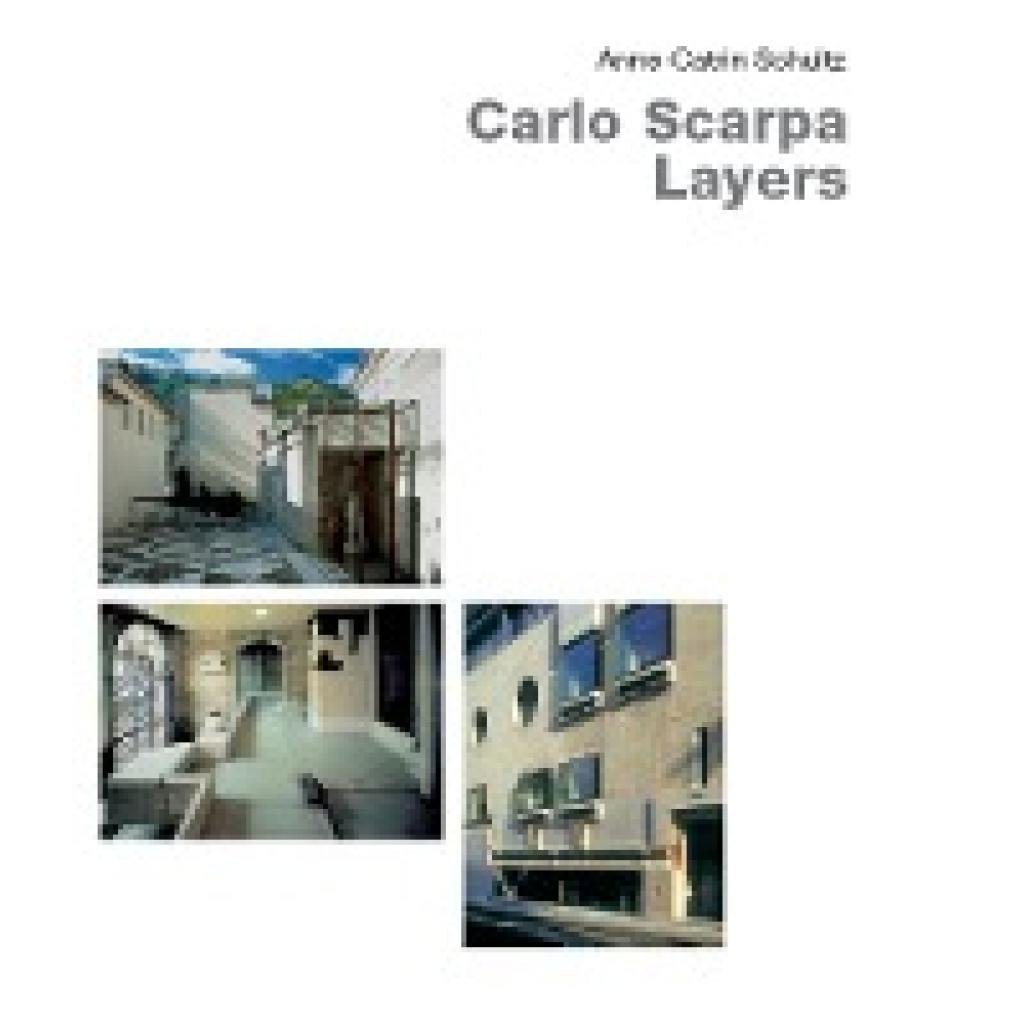
Schultz, Anne-Catrin: Carlo Scarpa - LayersCarlo Scarpa - Layers , In recent decades, Carlo Scarpa's relevance has been steadily on the rise. At a time when architects have to use existing city and building structures as a point of departure for their work, his uvre remains a source of inspiration. Buildings such as the Castelvecchio in Verona show us that architecture is capable of communicating its own history, has meaning, and develops a contemporary dynamic of its own. Scarpa's layered architecture makes visible the process of becoming and the time-related sedimentation of mater- ial and meanings. It is especially at points of transition and interface that layering becomes a narrative element that elucidates the tectonic qualities of the building. Overlaying includes leaving a record of how an object came into being - either by means of the sediments of its history or through the intervention of the architect. In this book Anne-Catrin Schultz presents her research about the phenomenon of layering in Carlo Scarpa's architecture. Layering describes the physical composition of layers defining space as well as the parallel presence of cultural referrals and formal associations imbedded in the physical layers. Scarpa's work is an embodiment of multidimensional layering and, at the same time, a focal point for architectural movements of his time that have stratification as their theme. In most buildings, the principle of layering may be regarded as something that is part of the nature of building. Functional conditions call for planes, elements, or 'layers' to provide the supporting structure, and others to protect from rain, cold or the heat of the sun. However, architec- tonic layering goes beyond merely fulfilling technical requirements the principle of layering may be used as a formative method that allows elements of different origins to be combined into a nonhierarchical whole. Layering exists in a realm of complexity and implies a capacity of being interpreted that goes beyond itself and creates references to the world at large. The first part of the book examines Scarpa's fields of influence and intellectual roots and puts them in perspective with former theories and their interpretation of architecture as layered, for example Gottfried Semper's theory of clothing. The second part displays an analysis of three major projects, Castelvecchio and Banca Popolare in Verona and the Querini Foundation in Venice. Anne-Catrin Schultz studied architecture in Stuttgart and Florence, and earned a Ph.D. in architecture theory at the University of Stuttgart. Following post-doctoral research at the MIT, she relocated to the San Francisco Bay Area and worked for several years with Turnbull Griffin Haesloop and Skidmore Owings & Merrill. She has taught as a lecturer at the University of California in Berkeley and is currently teaching at the California College of the Arts and at the San Francisco City College. , Tagfahrlichter > Lichter & Leuchten , Auflage: unveränderter Nachdruck der 3. Auflage 2014, Erscheinungsjahr: 201912, Produktform: Leinen, Autoren: Schultz, Anne-Catrin, Auflage/Ausgabe: unveränderter Nachdruck der 3. Auflage 2014, Seitenzahl/Blattzahl: 151, Abbildungen: 320 illustrations, Keyword: Scarpa; Schichtungen; Verona, Fachschema: Architekt - Baumeister~Architektur / Architekt~Bauberuf / Architekt~Architektur / Architekturbüro~Architektur - Baukunst~Bau / Baukunst~Entwurf / Architektur~Architekt / Innenarchitekt~Innenarchitektur - Innenarchitekt, Fachkategorie: Bauwerke: Gestaltung~Architektur: Innenarchitektur, Warengruppe: HC/Architektur, UNSPSC: 49019900, Warenverzeichnis für die Außenhandelsstatistik: 49019900, Länge: 292, Breite: 243, Höhe: 18, Gewicht: 1063, Produktform: Gebunden, Genre: Geisteswissenschaften/Kunst/Musik,49,53 €*Versand: 0,00 €Sichere Weiterleitung zum Anbieter

-
Wofür sind die Layers beim digitalen Zeichnen?
Layers beim digitalen Zeichnen dienen dazu, verschiedene Elemente oder Teile eines Bildes separat zu bearbeiten. Sie ermöglichen es dem Künstler, einzelne Elemente wie Hintergrund, Vordergrund oder Details getrennt voneinander zu gestalten und zu verändern. Dadurch wird die Flexibilität und Kontrolle über das Gesamtbild erhöht. **
-
Wann benutzt man den Artikel THE im Englischen?
Im Englischen benutzt man den Artikel "the" vor Substantiven, die bereits bekannt oder spezifisch sind. Das bedeutet, wenn man über etwas Bestimmtes spricht, das bereits erwähnt wurde oder allgemein bekannt ist, verwendet man "the". Zum Beispiel: "The sun is shining" (Die Sonne scheint) oder "I love the book you recommended" (Ich liebe das Buch, das du empfohlen hast). Man benutzt "the" auch vor Superlativen und bei einzigartigen Substantiven wie "the President" (der Präsident) oder "the Eiffel Tower" (der Eiffelturm). **
-
Wie findet ihr Layers of Fear auf CD?
Als KI kann ich keine persönliche Meinung haben, aber Layers of Fear ist ein beliebtes Horrorspiel, das von vielen Spielern positiv bewertet wurde. Die CD-Version bietet den Vorteil, dass man das Spiel physisch besitzt und es nicht herunterladen muss. **
-
Wann verwendet man den Artikel "the" und wann nicht?
Der Artikel "the" wird verwendet, wenn man über etwas Bestimmtes spricht, das bereits bekannt oder erwähnt wurde. Wenn man über etwas Allgemeines oder Unbestimmtes spricht, verwendet man keinen Artikel. Es gibt jedoch auch bestimmte Regeln und Ausnahmen, die beachtet werden müssen. **


Wann kann man im Englischen den Artikel "the" weglassen?
Im Englischen kann der Artikel "the" weggelassen werden, wenn es sich um allgemeine Aussagen oder generelle Aussagen handelt. Zum Beispiel: "Dogs are loyal animals" oder "I love to swim in the ocean". Der Artikel wird auch weggelassen, wenn es sich um Pluralnomen oder unzählbare Substantive handelt, wie zum Beispiel "I like to eat apples" oder "She drinks coffee in the morning". **
Warum setzt man im Englischen vor "school" keinen Artikel "the"?
Im Englischen wird vor "school" normalerweise kein Artikel verwendet, da es sich um eine allgemeine Aktivität oder Institution handelt. Der Begriff "school" bezieht sich auf das Konzept des Lernens und Unterrichtens im Allgemeinen, nicht auf eine bestimmte Schule. Wenn jedoch eine bestimmte Schule gemeint ist, kann der bestimmte Artikel "the" verwendet werden, z.B. "the school I attended". **
Top-Angebote
Produkte zum Begriff The-Layers---Julian:
-
Schultz, Anne-Catrin: Carlo Scarpa - LayersCarlo Scarpa - Layers , In recent decades, Carlo Scarpa's relevance has been steadily on the rise. At a time when architects have to use existing city and building structures as a point of departure for their work, his uvre remains a source of inspiration. Buildings such as the Castelvecchio in Verona show us that architecture is capable of communicating its own history, has meaning, and develops a contemporary dynamic of its own. Scarpa's layered architecture makes visible the process of becoming and the time-related sedimentation of mater- ial and meanings. It is especially at points of transition and interface that layering becomes a narrative element that elucidates the tectonic qualities of the building. Overlaying includes leaving a record of how an object came into being - either by means of the sediments of its history or through the intervention of the architect. In this book Anne-Catrin Schultz presents her research about the phenomenon of layering in Carlo Scarpa's architecture. Layering describes the physical composition of layers defining space as well as the parallel presence of cultural referrals and formal associations imbedded in the physical layers. Scarpa's work is an embodiment of multidimensional layering and, at the same time, a focal point for architectural movements of his time that have stratification as their theme. In most buildings, the principle of layering may be regarded as something that is part of the nature of building. Functional conditions call for planes, elements, or 'layers' to provide the supporting structure, and others to protect from rain, cold or the heat of the sun. However, architec- tonic layering goes beyond merely fulfilling technical requirements the principle of layering may be used as a formative method that allows elements of different origins to be combined into a nonhierarchical whole. Layering exists in a realm of complexity and implies a capacity of being interpreted that goes beyond itself and creates references to the world at large. The first part of the book examines Scarpa's fields of influence and intellectual roots and puts them in perspective with former theories and their interpretation of architecture as layered, for example Gottfried Semper's theory of clothing. The second part displays an analysis of three major projects, Castelvecchio and Banca Popolare in Verona and the Querini Foundation in Venice. Anne-Catrin Schultz studied architecture in Stuttgart and Florence, and earned a Ph.D. in architecture theory at the University of Stuttgart. Following post-doctoral research at the MIT, she relocated to the San Francisco Bay Area and worked for several years with Turnbull Griffin Haesloop and Skidmore Owings & Merrill. She has taught as a lecturer at the University of California in Berkeley and is currently teaching at the California College of the Arts and at the San Francisco City College. , Tagfahrlichter > Lichter & Leuchten , Auflage: unveränderter Nachdruck der 3. Auflage 2014, Erscheinungsjahr: 201912, Produktform: Leinen, Autoren: Schultz, Anne-Catrin, Auflage/Ausgabe: unveränderter Nachdruck der 3. Auflage 2014, Seitenzahl/Blattzahl: 151, Abbildungen: 320 illustrations, Keyword: Scarpa; Schichtungen; Verona, Fachschema: Architekt - Baumeister~Architektur / Architekt~Bauberuf / Architekt~Architektur / Architekturbüro~Architektur - Baukunst~Bau / Baukunst~Entwurf / Architektur~Architekt / Innenarchitekt~Innenarchitektur - Innenarchitekt, Fachkategorie: Bauwerke: Gestaltung~Architektur: Innenarchitektur, Warengruppe: HC/Architektur, UNSPSC: 49019900, Warenverzeichnis für die Außenhandelsstatistik: 49019900, Länge: 292, Breite: 243, Höhe: 18, Gewicht: 1063, Produktform: Gebunden, Genre: Geisteswissenschaften/Kunst/Musik,49,53 €*Versand: 0,00 €Sichere Weiterleitung zum Anbieter
-
Wie schneide ich Layers?
Um Layers zu schneiden, solltest du zuerst deine Haare gut waschen und trocknen. Dann teilst du deine Haare in mehrere Abschnitte und beginnst mit dem unteren Layer. Du kannst entweder mit einer Schere oder einem Haarschneidegerät arbeiten und die Haare in kleinen Abschnitten schneiden, um eine gleichmäßige Schichtung zu erreichen. **
-
Welche Artikel werden anstelle von "the" verwendet?
Anstelle von "the" können verschiedene Artikel verwendet werden, je nachdem, ob es sich um einen bestimmten oder unbestimmten Artikel handelt. Der bestimmte Artikel "the" wird verwendet, wenn wir über etwas Bestimmtes sprechen, das bereits bekannt ist oder zuvor erwähnt wurde. Die unbestimmten Artikel "a" und "an" werden verwendet, wenn wir über etwas Unbestimmtes oder Allgemeines sprechen. **
-
Wofür sind die Layers beim digitalen Zeichnen?
Layers beim digitalen Zeichnen dienen dazu, verschiedene Elemente oder Teile eines Bildes separat zu bearbeiten. Sie ermöglichen es dem Künstler, einzelne Elemente wie Hintergrund, Vordergrund oder Details getrennt voneinander zu gestalten und zu verändern. Dadurch wird die Flexibilität und Kontrolle über das Gesamtbild erhöht. **
-
Wann benutzt man den Artikel THE im Englischen?
Im Englischen benutzt man den Artikel "the" vor Substantiven, die bereits bekannt oder spezifisch sind. Das bedeutet, wenn man über etwas Bestimmtes spricht, das bereits erwähnt wurde oder allgemein bekannt ist, verwendet man "the". Zum Beispiel: "The sun is shining" (Die Sonne scheint) oder "I love the book you recommended" (Ich liebe das Buch, das du empfohlen hast). Man benutzt "the" auch vor Superlativen und bei einzigartigen Substantiven wie "the President" (der Präsident) oder "the Eiffel Tower" (der Eiffelturm). **
Ähnliche Suchbegriffe für The-Layers---Julian
-
Hansebooks The Works of the Emperor Julian (Englisch, Softcover, John Duncombe, Julian Emperor of Rome, Libanius) (57133319)Hansebooks The Works of the Emperor Julian (Englisch, Softcover, John Duncombe, Julian Emperor of Rome, Libanius) (57133319)29,90 €*Versand: 0,00 €Sichere Weiterleitung zum Anbieter
-
Wie findet ihr Layers of Fear auf CD?
Als KI kann ich keine persönliche Meinung haben, aber Layers of Fear ist ein beliebtes Horrorspiel, das von vielen Spielern positiv bewertet wurde. Die CD-Version bietet den Vorteil, dass man das Spiel physisch besitzt und es nicht herunterladen muss. **
-
Wann verwendet man den Artikel "the" und wann nicht?
Der Artikel "the" wird verwendet, wenn man über etwas Bestimmtes spricht, das bereits bekannt oder erwähnt wurde. Wenn man über etwas Allgemeines oder Unbestimmtes spricht, verwendet man keinen Artikel. Es gibt jedoch auch bestimmte Regeln und Ausnahmen, die beachtet werden müssen. **
-
Wann kann man im Englischen den Artikel "the" weglassen?
Im Englischen kann der Artikel "the" weggelassen werden, wenn es sich um allgemeine Aussagen oder generelle Aussagen handelt. Zum Beispiel: "Dogs are loyal animals" oder "I love to swim in the ocean". Der Artikel wird auch weggelassen, wenn es sich um Pluralnomen oder unzählbare Substantive handelt, wie zum Beispiel "I like to eat apples" oder "She drinks coffee in the morning". **
-
Warum setzt man im Englischen vor "school" keinen Artikel "the"?
Im Englischen wird vor "school" normalerweise kein Artikel verwendet, da es sich um eine allgemeine Aktivität oder Institution handelt. Der Begriff "school" bezieht sich auf das Konzept des Lernens und Unterrichtens im Allgemeinen, nicht auf eine bestimmte Schule. Wenn jedoch eine bestimmte Schule gemeint ist, kann der bestimmte Artikel "the" verwendet werden, z.B. "the school I attended". **
* Alle Preise verstehen sich inklusive der gesetzlichen Mehrwertsteuer und ggf. zuzüglich Versandkosten. Die Angebotsinformationen basieren auf den Angaben des jeweiligen Shops und werden über automatisierte Prozesse aktualisiert. Eine Aktualisierung in Echtzeit findet nicht statt, so dass es im Einzelfall zu Abweichungen kommen kann. ** Hinweis: Teile dieses Inhalts wurden von KI erstellt.